


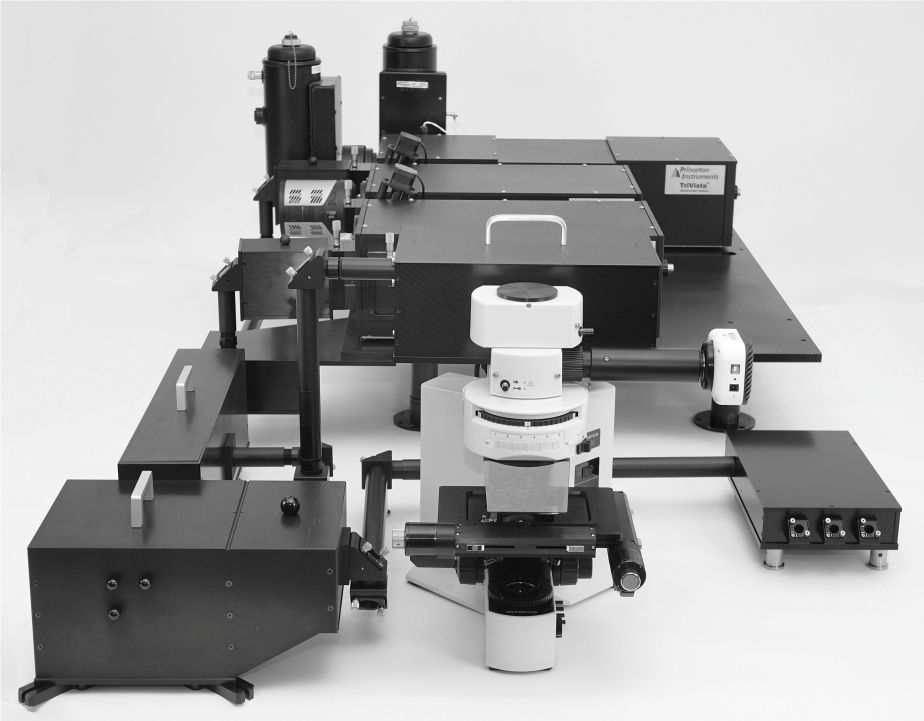


High-performance modular design with different systems configured for a variety of optical tests (Raman, fluorescence, PL, time-resolved spectroscopy and fluorescence lifetime) depending on the user’s application
TriVista CRS+ System Overview
- High-performance modular design, different systems configured according to the user’s application, various optical tests (Raman, fluorescence, PL, time-resolved spectroscopy and fluorescence lifetime)
- Ultra-high resolution (0.14cm-1), ultra-low wave number (<5cm-1), super stray light suppression, high sensitivity
- Add mode, subtract mode is the same optical path, after the software converts the mode, there is no need to correct the optical path
- The only Raman spectrometer with a built-in three-grating, covering the full UV-IR band, does not require calibration of the optical path after the software converts the grating
- Also observe Stokes-Anti Stokes
- High-pass luminance spectrometer, focal length optional: 500/500/500mm, 500/500/750mm, 750/750/750mm
- The spectral detector can be configured with high quantum efficiency (QE>95%) CCD, EMCCD, ICCD, InGaAs arrays, and a variety of single-point detectors
- The microscope can be configured with OLYMPUS BX51 upright or IX71 inverted research grade microscope, XYZ automatic platform
- Can be configured with large sample box, user’s own sample box, vacuum sample box, high and low temperature sample table, magnetic field
- Multiple slit inlets, multiple CCDs and slit outlets, highly scalable, coupled Raman fiber optic probes, scanning microscopes
- Steady-state lasers, pulsed lasers, OPO lasers, UV-IR arbitrary wavelengths
Expandable to TCSPC systems - The system design is reasonable, the structure is stable, the optical path is not affected by temperature, and no professional maintenance is required
peculiarity:
Advancement
- The TriVista series of three-stage Raman spectroscopy systems can achieve a resolution of 0.14cm-1/pixel in plus mode. Any slight spectral difference can be accurately resolved
- The TriVista series of three-stage Raman spectroscopy systems use the first two high-performance spectrometers to filter out sharp-line scattered light, with no selectivity for laser wavelengths, no filter required, and low-wave count measurements up to 5cm-1
- The TriVista series of three-stage Raman spectrometers use PI’s unique sharp line reduction technology to obtain low-wave Stokes/AntiStokes Raman spectra in a CCD window without rotating the grating, avoiding position errors caused by grating rotation. Due to laser limitations, many users are at a loss for fluorescence interference, and AntiStokes can help you
- The system combines atomic force to achieve TERS needle tip enhanced Raman spectroscopy testing, which can solve the detection of sample signals at the nanoscale
- Resonance Raman analysis: combined with the tunable wavelength laser, to achieve variable excitation wavelength resonance Raman analysis, for materials with different band gap widths, the side versatility and applicability of the system is extremely strong, solving the problem of single
- wavelength laser picking materials, such as the absorption zone of carbon nanomaterials, the president changes with the material characteristics, and the single wavelength laser cannot obtain useful information
High resolution
- For the study of semiconductor pressure/stress, carbon nanotubes, homogeneous and heterogeneous multimorphic phenomena, fine bonding effects, etc., it is necessary to use a high dispersive spectroscopy system to obtain high-resolution spectra, obtain more detailed sample
- information, and discover subtle differences in sample Raman peaks
Small Raman spectrometers are limited by spectrometer focal length and grating, and the spectral resolution is typically 0.5cm-1/pixel to 1cm-1/pixel - The TriVista series of three-stage Raman spectroscopy systems can achieve a resolution of 0.14cm-1/pixel in plus mode. Any slight spectral difference can be accurately resolved
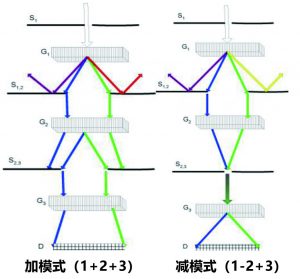
The addition mode and subtract mode are the same optical path
- After the software converts the mode, there is no need to correct the optical path
- The only Raman spectrometer with a built-in three-grating, covering the full UV-IR band, does not require calibration of the optical path after the software converts the grating
Low wave number
- As a general instrument for laboratories, small Raman spectrometers use Notch Filter or Edge Filter to filter out Rayleigh line scattered light, and due to the technical limitations of the filter, the minimum measurement frequency is around 100cm-1, which is suitable for testing conventional samples
- Low-wave number Raman spectroscopy (0-100cm-1) is an indispensable analytical tool that helps determine the dynamic structure of these samples in a variety of scientific fields, such as single-walled/multi-walled carbon nanotubes, lattice vibrations of crystals, polymers, superlattice semiconductor materials, liquids, mixtures, etc. For such samples, only a three-stage Raman spectroscopy test system is used, using the subtraction mode of the spectrometer to filter out the sharp-line scattered light
- The TriVista series of three-stage Raman spectroscopy systems use the first two high-performance spectrometers to filter out sharp-line scattered light and measure low wave numbers up to 5cm-1
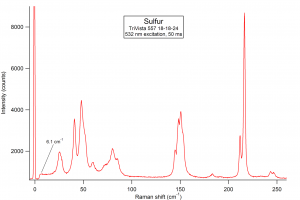
Sulfur’s ultra-low wave number Raman(>=5cm-1)
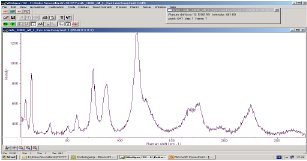
L-Crystine’s positive and negative Stokes scattering, since the intensity change of AntiStokes is related to temperature, by calculating the ratio of Stokes to AntiStokes, the sample can be accurately known
Ultra-high sensitivity
- Liquid nitrogen refrigeration detector, using Pricenton Instruments detector, ultra-low noise, can achieve up to 1h exposure time
- Detectors with different area arrays and pixel sizes
InGaAs array detectors - For fast Raman mapping, an electron-gain detector can be used
- Back-illuminated eXcelon detector with minimal ripple effect
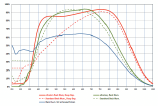 | 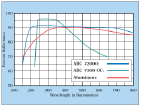 |
QE curves for different detectors
The system is flexibly expandable
- Microscope head-of-class three-raster configuration that covers the UV-IR band. Can do fluorescence, PL, time-resolved spectroscopy, fluorescence lifetime
– Deep ultraviolet to near-infrared wavelength range (200 to 1600 nm)
– Up to 4 integrated multi-line lasers and ports
– Large external lasers
– UV and visible/near-infrared dual beam paths
– Raman filters from UV to near-infrared
– Suitable for 488, 514, 532, 633, 785 and 1064 nm
- Macro characteristics of large samples: 1x1cm cuvettes, solid samples with a maximum size of 5x5x5cm, powders, powder tablets, films, etc. can be placed
- Macro-optical path coupling input: can be coupled to high pressure sample cell, high and lowtemperature Dewar, vacuum sample box, electrochemical sample cell, etc. It can also be coupled to an optical fiber or using a standard camera lens
- Can be absorbed, transmitted, positive reflection, any angle of excitation
- Special-shaped sample chamber
- Raman probes
System performance parameters
- Wavelength range: Deep ultraviolet to near-infrared wavelength range
- Up to 4 lasers are integrated, with the option of an optional large external laser port
- Dual UV and visible/near-infrared beam paths
- Automatic control of laser selection
- Auto alignment, focusing and calibration functions
- Ultra-high Raman spectral resolution, such as FWHM< 0.1 cm-1@633nm
- Three-stage minus mode eliminates the need for filters, and low wave counts can be tested to +/-5cm-1
- The high wave number range can reach 9000cm-1 (@532nm), which is suitable for photoluminescence
- Thermoelectric refrigeration and liquid nitrogen refrigeration detectors
- Upright/inverted/dual microscope
- Stepper motor and piezo drive XYZ displacement table
- Fast Raman mapping
- Integrated control heating/cooling station, liquid helium temperature cryogenic thermostat
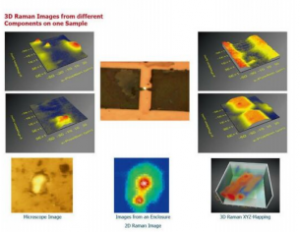
- Can be combined with Raman imaging and atomic force microscopy imaging
- Automatic control of the polarization spectrum function
Fields of application :
- It is applicable to the study of third-generation semiconductor materials represented by gallium nitride (GaN) and zinc oxide (ZnO) at the nanoscale
- Wide bandgap II.-VI. semiconductor luminescence, laser and photoelectric detection materials, devices, etc
- In high-voltage scientific research, the study of materials, devices, and energy conversion processes
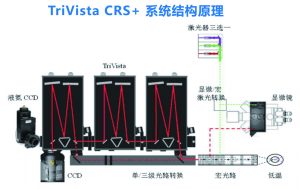
TriVista CRS+ system architecture principles
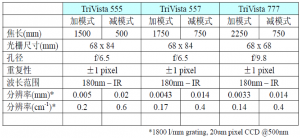
Parametric performance of a three-cascade spectrometer
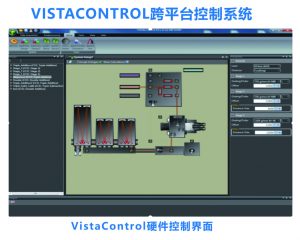
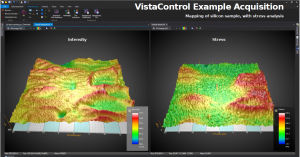
VISTACONTROLCross-platform control system
The reduced mode 1 stage grating and the 2 stage grating rotate in reverse, re-closing the light, using the precision control of the slit to eliminate the same optical path of the laser Rayleigh line plus mode/subtract mode, and the software switches without correcting the optical path.
 |  |
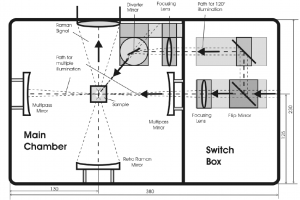 |  |
- Large sample box, can be placed solid samples, powder samples, thin film samples, cuvette cell, absorption measurement, transmission, positive reflection, any angle excitation laser automatic selection,
- Automatic alignment of the optical path wavelength and intensity auto-calibration function
- Temperature control during the heating, cooling phases and cryogenic states
- Automatic Z-axis focusing Raman imaging
- Fast Raman/Fluorescence/Lifetime Mapping
- Fluorescence and background suppression
- Spectral library matching data (material composition analysis)
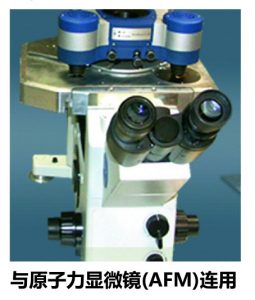
- It is used in conjunction with atomic force microscopy (AFM) and controlled
- Various data formats exported, various post-processing programs
- Extend the optical path, and use with the external cryogenic table, SEM
TriVista CRS+ is a versatile “integrated spectral imaging analysis platform” that provides customized solutions at the scientific level
